Why is one drain slow when the rest of the house is fine?
A single slow drain, like a bathroom sink or shower, almost always means a local clog close to that fixture. In a bathroom it is usually hair and soap scum matted just past the opening. In a kitchen it is grease that has cooled and hardened on the pipe wall, with food particles caught in it. The blockage sits in that fixture's own branch line, so nothing else in the house feels it. This is a cable machine job, because the cable punches a channel through the clog and restores flow. A safe homeowner check is to pull visible hair from the drain opening, or to clear the P-trap under a sink. If every drain in the house is slow or backing up together, the blockage is downstream in the main line, and that is a different job with different equipment. Root intrusion at a clay joint, a bellied section holding water, scale narrowing old cast iron, or a partly collapsed pipe can all cause it. If water rises in a tub when you flush the toilet, or a floor drain bubbles when the washer runs, stop running water and call. A plumber in Marion, SC can tell which situation you have from a few questions.
Watch how the slow drain behaves over a few days, because the pattern tells you whether it is getting worse. A sink that drains a little slower each week is usually a clog that is still growing, and it is cheaper and easier to deal with early than after it stops completely. A drain that clears and then slows again within a day or two suggests buildup on the pipe wall rather than a single plug. A common mistake is pouring boiling water down a drain that has a plastic trap or plastic pipe, which can soften joints and loosen them. Another is pushing the clog further down with a stiff wire hanger, which can scratch the pipe or wedge debris deeper. If the slow fixture is the one closest to the main line, such as a ground floor tub, treat it more seriously, since it can be the first sign of trouble in the main.
Why does the toilet gurgle when the washing machine drains?
Gurgling means air is being pushed or pulled through a water trap, and it happens when the drain system cannot move water and air freely. A washing machine dumps a large volume of water fast. That surge travels down the drain line and pushes air ahead of it. If the main line is partly blocked, that air has nowhere to go and bubbles back up through the nearest trap, often the toilet or a shower. A blocked vent stack does the reverse. Vents let air in behind draining water so it flows smoothly, and when a vent is plugged by a bird nest, leaves, or debris, the draining water pulls air through the traps instead, and you hear it as gurgling. Either way, it is a sign the whole drain system is under strain, not just one fixture. A single slow toilet is a local clog, but gurgling that follows other fixtures points to the main line or the vent. Keep the washer and other big loads off until it is checked, since a partial blockage can turn into a full backup. A camera inspection shows whether the cause is roots, a bellied pipe, or scale. A plumber in Marion, SC can find it, and Expert Plumbers Co can make the introduction.
Here is a simple test to separate the two causes at home. Run water in one sink only and listen. Then flush a toilet by itself and watch the tub and the sink for movement or bubbling. If the sounds appear only when a particular fixture runs, the blockage is probably in the branch serving that area. If they appear whenever the washer drains, regardless of what else is running, the main line or the vent is the more likely suspect. A roof vent can be checked visually from the ground for a bird nest or heavy leaf buildup, but nobody should climb onto a roof to do it. In older homes, a vent run through a wall can corrode or sag, while newer homes sometimes use air admittance valves under sinks that can wear out and let a trap siphon dry. Tell the plumber what you noticed and when.
Small flies keep coming out of the drain. Is that a clog?
Possibly, but not always. Small flies rising out of a drain are drain flies. They breed in the organic film that coats the inside of the trap and the first few inches of pipe, not in clean standing water. The film is the nursery.
A slow or partly blocked drain gives that film somewhere to sit, which is why flies and a slow drain often show up together. A drain nobody uses is a different case. When its trap dries out, flies and sewer odor both come straight up the pipe.
Safe homeowner check. Tape a card or a clear bag over each suspect drain overnight. Flies on the underside show which one they come from. Clean the strainer and the visible part of the drain. On a rarely used drain, pour in a bucket of water to refill the trap.
A cable machine is enough when one fixture is slow and no flies are involved. A cable only cuts a channel through the blockage and leaves the film on the pipe wall. A line that keeps producing flies after cleaning usually needs hydro jetting, which strips the wall back to bare pipe.
One fixture is a local job. Flies plus several slow drains point further down the line: grease build-up on the pipe wall, a bellied section holding water, or root intrusion at a joint. That calls for a camera inspection before anyone picks equipment.
Stop running water and call if drains gurgle, sewage odor fills the room, or water rises in the lowest fixture.
Expert Plumbers Co is a referral service. We refer homeowners in Marion, SC to an independent local plumber for Drain Cleaning. Call (380) 262-9173.
The choice of cleaner matters. Bleach poured down the drain kills flies on contact but leaves the film they feed on, so they return within days. Boiling water helps on metal pipe but can soften or loosen joints on some plastic, so use hot tap water. A stiff brush on the strainer area and the first few inches of pipe does more than any liquid. An enzyme cleaner left overnight can digest the film, but treat it as upkeep, not a cure for a blocked line.
Check the overflow opening on sinks and tubs too. That channel is rarely cleaned and can breed flies.
Adult drain flies are weak fliers and rest on walls near the source, so counting them each evening shows whether cleaning is working. If the numbers do not fall within a week of thorough cleaning, the source is deeper in the line, or in a seldom-used floor drain in a basement or utility room that nobody thinks about.
There is a soggy strip, a sinkhole or an unusually green line of grass over where my sewer runs. Is that a broken sewer line?
It can be. A wet strip, a dip in the lawn or a stripe of grass that is greener than the rest, all following the path of the sewer, is a classic sign that the pipe is leaking into the soil. Waste water carries nutrients, so the grass above it grows lush while the ground underneath stays soggy.
A sinkhole is more serious. If soil is washing into a cracked or separated pipe, it leaves a void that grows over time. The surface may look fine until the roof of that void gives way. Keep people, pets and vehicles off the area and do not fill it yourself with a quick load of dirt, because the hole will usually return.
Other things can look similar, so check before assuming. A leaking irrigation line, a broken water supply pipe or a downspout discharging at that spot can all soak a strip of lawn. A simple test: shut off every tap and appliance, then look at your water meter. If it keeps moving, the leak is likely on the supply side, not the sewer. If the meter is still, and you also notice slow drains, gurgling, a sewage smell outdoors or backups, the sewer is the stronger suspect.
Safe checks you can do:
Note where the wet or green strip runs and whether it lines up with the cleanout or the path to the street. Reduce water use until the line is looked at.
Stop running water and call now if sewage is surfacing, a hole is opening, or drains inside the house are backing up.
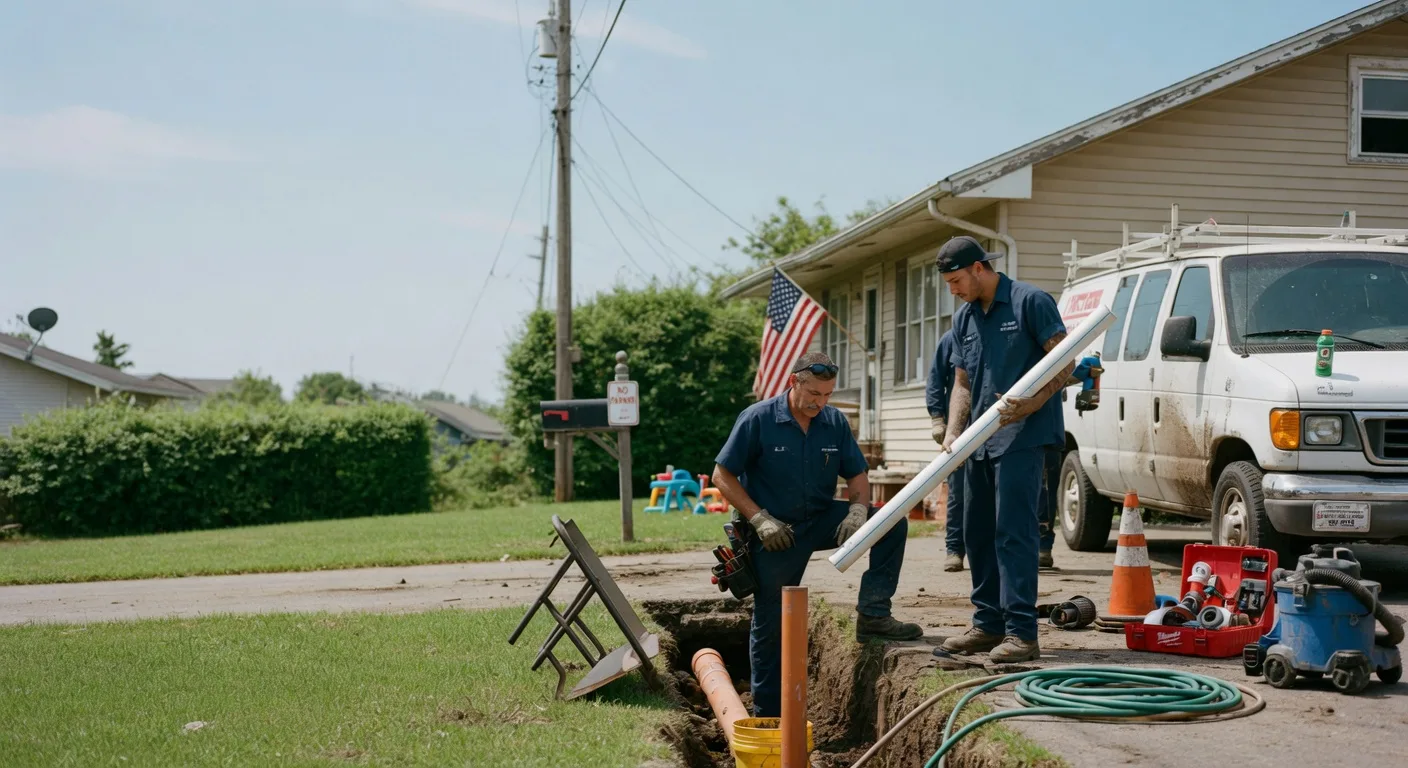
Cleaning alone does not fix a broken pipe. A camera inspection is how a plumber finds the break, shows how far the damage runs and tells whether the pipe is cracked, offset at a joint or collapsed. Repair can then be a spot repair, a liner through the existing pipe, or replacement of a section. Cost is driven by depth, length of pipe affected, what sits on top of it such as a driveway, trees or a patio, how much has to be excavated, the pipe material and permits under local code. To be connected with an independent local plumber in Marion, SC, call Expert Plumbers Co on (380) 262-9173.
Our main line backed up the day after a big family gathering. Did all those guests cause it?
Probably in part, but usually not on their own. A house full of guests puts far more water and waste through the drains in a day than the plumbing sees in a normal week: extra toilet flushes, showers, dishes, laundry, and a lot of toilet paper and food scraps. A healthy sewer line takes that in stride. A line that was already narrowed will not.
That is the common story. Roots at a clay joint, grease coating the pipe wall, a low spot that holds water, or scale in old cast iron can leave the line working at half capacity. Daily use hides it. Then a crowd of people finishes the job and the water has nowhere to go.
Some party habits do add to the problem. Grease and fat from cooking poured into the sink, food pushed into the disposal, paper towels and napkins in the toilet, wet wipes and feminine products all build up quickly. Guests do not know what the house can take.
Look at how the backup shows. If one toilet or sink is blocked, the trouble may be local to that fixture. If several drains are slow, a toilet gurgles when something else runs, or a basement drain or tub fills, the main line is the likely cause.
Safe checks you can do:
Stop using water, including the washer and dishwasher. Do not keep flushing to see if it clears. Keep people off wet floors.
Stop running water and call now if sewage is coming up inside, especially in the basement or a tub.
A cable machine often clears a mass of paper and grease. If the line backed up under a normal load before, or comes back after clearing, a camera inspection shows whether roots, a belly or a damaged section are the real reason. Cost depends on where the blockage sits, access to the cleanout, the tools needed and whether any repair follows, including permits under local code. To be connected with an independent local plumber in Marion, SC, call Expert Plumbers Co on (380) 262-9173.